I used to be the person who landed after a 10-hour flight looking like I’d lost a fight. Puffy eyes, that gritty, unslept feeling, and a first meeting where I was nodding along on autopilot. For years I told myself I just “wasn’t someone who could sleep well on planes.” Turns out, I just never had the right gear.
The turning point was a Frankfurt–Singapore flight a while back. Middle-of-the-day departure, cabin lights that never fully dimmed, and a person next to me watching a movie on full brightness for four hours straight. I had a cheap, flat sleep mask from the business class amenity kit — the kind that lies right on your eyelids. It kept sliding up, letting light in from the sides, and honestly did more harm than good. I landed exhausted, again.
So I actually started paying attention to what makes a sleep mask work on langer flights instead of just being a thing you throw in your bag.
What I Got Wrong for Years
I assumed all sleep masks were basically the same — a strip of fabric with elastic. What I didn’t realize is that most of them press directly on your eyes, which actually disrupts REM sleep instead of helping it. And the flat, cheap ones almost never seal properly around the nose, so any overhead light or window glare sneaks right in.
What Actually Changed Things for Me
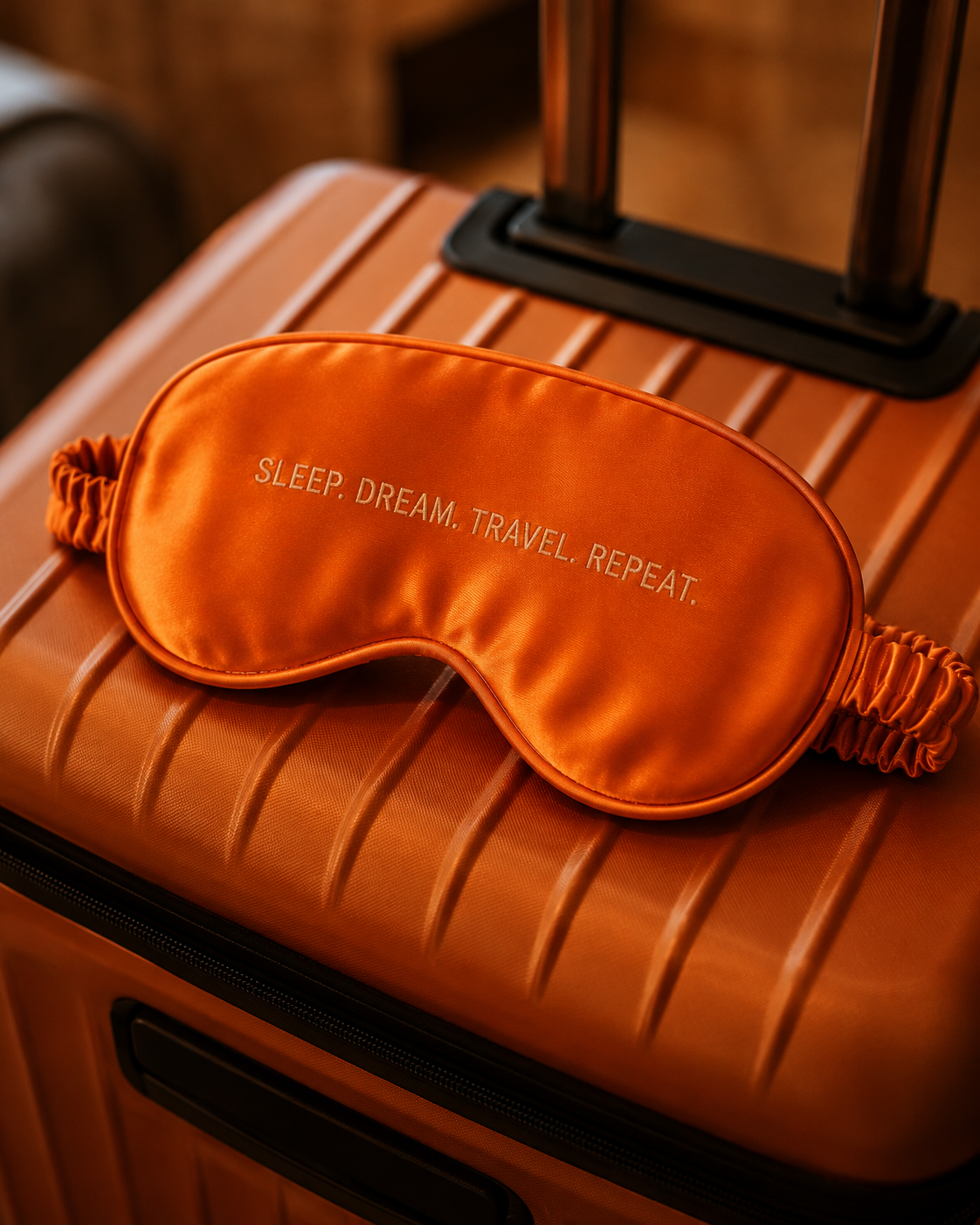
The mask I now bring on every single trip is a 3D contoured design — it curves away from your eyes completely, so there’s no pressure even after six or seven hours. No more waking up with mask-lines on my face or that weird eye-strain feeling. It blocks light fully at the edges, and the strap is adjustable enough that it doesn’t ride up when I shift in my seat, which — if you’ve ever tried to get comfortable in economy or even premium economy — happens a lot.
👉 This is the one I use — check current price on Amazon
(Swap in your own Amazon Associates tracking ID before publishing — right now YOURTAG-20 is just a placeholder.)
The One Combo I’d Recommend
If I could go back and tell myself one thing, it’d be this: pair the mask with good earplugs or noise-cancelling headphones. Light and sound are the two things pulling you out of sleep on a plane, and once I started blocking both, long-haul flights stopped being something I dreaded and started being genuinely useful recovery time before landing.
It’s a small thing, but it’s made a real difference in how I show up for meetings the day I land — and that’s the whole point of traveling smart.
Disclaimer: This post contains affiliate links. If you make a purchase through these links, I may earn a small commission at no additional cost to you.
The image is AI generated.